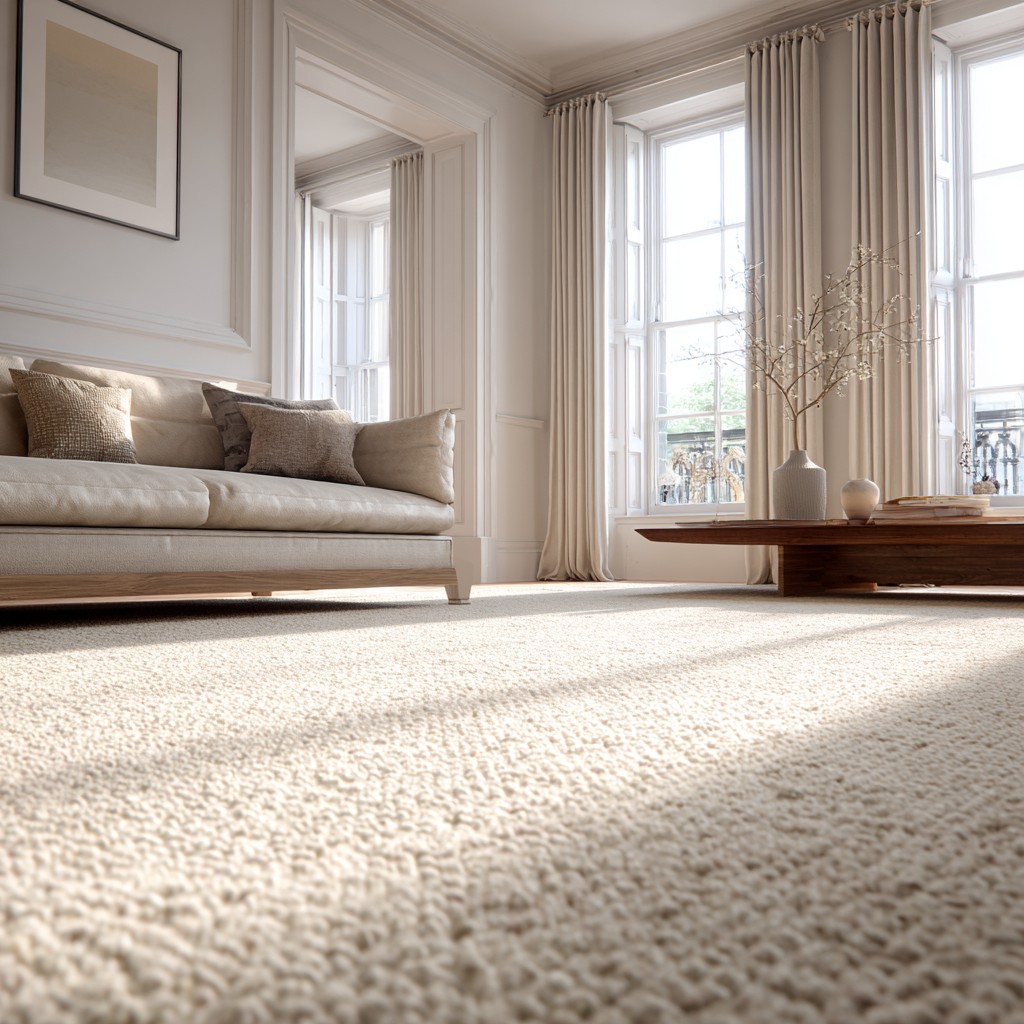

How to Clean Wool Carpets Without Shrinkage or Colour Loss
Wool carpets are, without question, some of the finest flooring you can put in a home. Warm underfoot, naturally resilient, and possessed of a depth and texture that no synthetic fibre has ever convincingly replicated – they are the kind of investment that, properly cared for, outlasts the furniture around them. But here’s the thing nobody tells you when you’re standing in the showroom admiring that gorgeous Axminster: wool is also one of the most punishing materials to clean if you get it wrong. Shrinkage, dye bleed, felting, watermarks – these aren’t remote possibilities. They’re the predictable consequences of well-meaning but misinformed cleaning attempts that happen to carpets across Islington every single week. So, can wool carpets be cleaned safely, without damage? Absolutely. But it requires understanding what you’re actually dealing with before you reach for the spray bottle.
Why Wool Carpets Demand a Different Approach
The Science Behind Wool Fibres
Here’s where things get briefly scientific, but bear with it – this part genuinely matters. Each individual wool fibre is coated in overlapping microscopic scales, a bit like roof tiles running along the length of the strand. Under normal conditions, those scales lie flat and behave themselves. Introduce heat, aggressive agitation, or the wrong chemicals, and those scales lift and interlock with the scales on neighbouring fibres. Once that happens, the fibre structure tightens, the carpet contracts, and you’ve got what’s technically called felting – and what you’d call a very expensive problem.
Wool also contains lanolin, its natural protective oil, which gives it that soft, slightly lustrous quality. Strip the lanolin out with harsh detergents and you’re left with a fibre that’s duller, more brittle, and far more vulnerable to everything that comes after.
The Two Biggest Risks – Shrinkage and Colour Loss
Shrinkage and colour loss are the two villains of this story, and it’s worth understanding each of them clearly. Shrinkage happens primarily through over-wetting and heat. When wool absorbs too much water, the fibres swell, the scales engage, and as the carpet dries under tension, it contracts – sometimes significantly. On a fitted carpet, this can cause buckling, rippling, and permanent distortion of the pile.
Colour loss is a separate but equally grim outcome. Wool carpets – particularly hand-tufted or vegetable-dyed rugs – use dye molecules that bond to the fibre at specific chemical sites. Alkaline cleaning products attack those bonds directly, causing dyes to shift, fade, or bleed into adjacent areas. The cruel irony is that both disasters can occur at the same time, from the same cleaning attempt. And unlike a bad haircut, neither grows back.
What to Do Before You Clean Anything
Identify Your Carpet’s Wool Content and Dye Type
Not every carpet labelled “wool” is pure wool. Many are wool-blend constructions – the classic 80/20 wool-nylon mix being the most common – and these behave differently under moisture and chemical exposure than their 100% wool counterparts. The nylon component tends to be more forgiving, but it also changes how the carpet responds to certain cleaning agents. Check the manufacturer’s label, usually found on the back of a rug or in the original documentation for fitted carpets.
If you’re genuinely unsure of the fibre content and have a snippet from offcuts or the back of the carpet, a burn test gives you a decent clue. Wool burns slowly, smells unmistakably of singed hair, and leaves a crushable ash. Synthetics melt and bead. It’s not forensic science, but it’s useful.
Always Patch Test – No Exceptions
This is the rule that experienced cleaners live by and that DIY enthusiasts routinely skip – usually once. Before applying any cleaning solution to a wool carpet, test it in a discreet area: inside a wardrobe, behind a door, under a sofa that isn’t moving any time soon. Apply a small amount, agitate gently, blot with a white cloth, and let it dry fully before inspecting.
You’re looking for three things: colour transfer onto the cloth, any change in texture or pile structure, and whether a watermark ring appears once the area dries. A ten-minute patch test is a trivial inconvenience. Discovering that your cleaning product has turned a corner of your living room carpet a slightly different shade of beige is considerably less trivial.
Choosing the Right Cleaning Products for Wool
pH Is Everything – Stay in the Safe Zone
Wool is chemically sensitive in a very specific way: it tolerates mildly acidic to neutral conditions comfortably, and reacts badly to anything pushing into alkaline territory. The safe pH window for wool is broadly 5 to 8. Below that, you risk fibre degradation; above it, you risk stripping lanolin and attacking dye sites. Most supermarket carpet cleaning sprays sit at a pH of 9 or above. They’re formulated for synthetics, and they’ll do measurable damage to wool with repeated use.
When shopping for wool-safe products, look for the Woolmark certification or products endorsed by the National Carpet Cleaners Association (NCCA). These have been specifically tested against wool’s tolerances. They cost a little more, and they’re worth every penny.
Products and Ingredients to Avoid
Some of these will be in your cleaning cupboard right now, which is exactly why this list matters. Bleach is an obvious one – it will strip colour from wool with almost theatrical speed. Enzyme-based cleaners, despite being effective on synthetic carpets and popular for pet stains, are designed to break down protein structures. Wool is a protein fibre. Work that one out. Optical brighteners, common in general-purpose fabric cleaners, leave fluorescent residues that look fine initially and then cause uneven yellowing as the carpet ages. High-alkaline detergents – including many washing-up liquids people reach for instinctively – fall well outside that safe pH window. Treat them accordingly.
Step-by-Step: How to Safely Spot Clean Wool Carpets
Tackling Spills the Right Way (Act Fast, But Don’t Panic)
The first thirty seconds after a spill are the most important, and the most dangerous – because panic leads to scrubbing, and scrubbing is precisely what you must not do. Blot immediately, using a clean white cloth or thick paper towel. Work from the outer edge of the spill inward, which prevents the stain from spreading outward into a larger, more spectacular problem. Cold water only at this stage – warm or hot water accelerates dye bleed and encourages the fibres to swell.
Lift as much of the spill as possible through blotting alone before introducing any cleaning solution. The less liquid that penetrates into the backing and underlay, the better your outcome.
Treating Dried or Set-In Stains
Dried stains require a little more patience and a lot more restraint. Begin by gently loosening any dried residue with a blunt tool – a spoon works well – being careful not to distort the pile. Then apply a diluted wool-safe cleaning solution sparingly, using a soft-bristle brush to work it in with minimal agitation. Small circular motions applied with very light pressure are your friend here. Blot, don’t rub, and repeat the process in stages rather than saturating the area and hoping for the best.
Red wine, ground-in mud, and – the perennial nightmare – pet urine that’s been left untreated for any length of time may not yield fully to DIY methods, particularly on light-coloured or naturally-dyed wool. Setting realistic expectations here isn’t defeatism; it’s just honesty.
Deep Cleaning Wool Carpets – Getting It Right
Low-Moisture Methods Are Your Best Friend
For periodic deep cleaning beyond spot treatment, low-moisture methods offer the best balance of effectiveness and safety for wool. Encapsulation cleaning uses a specialist solution that crystallises around soil particles as it dries, allowing them to be vacuumed away without significant water penetration. Dry compound cleaning works on a similar principle, using an absorbent compound worked gently through the pile. Neither method delivers the same deep-soil extraction as hot water extraction, but both are far gentler and substantially reduce the risk of over-wetting – which remains the primary cause of shrinkage and backing damage in fitted wool carpets.
Why Steam Cleaning Is Risky for Wool (and What to Do Instead)
Hot water extraction – frequently but incorrectly called “steam cleaning” – isn’t automatically disqualifying for wool carpets, but the conditions under which it’s safe are fairly specific. Domestic hire machines typically run too hot, deliver too much water, and don’t have sufficient extraction power to recover it efficiently. Wool can tolerate low-temperature HWE at controlled moisture levels, but this is the territory of professional truck-mounted or low-flow machines operated by technicians who understand wool chemistry.
Drying Properly – The Step Most People Get Wrong
Drying is where a surprising number of otherwise well-executed cleans go wrong, and it’s particularly relevant in London, where damp, overcast weather is less a seasonal phenomenon and more a personality trait. After any wet or damp cleaning method, maximise airflow immediately – open windows, run fans across the surface, and keep the room as ventilated as possible. Never apply direct heat from radiators, heat guns, or hair dryers; the combination of residual moisture and heat is precisely what triggers felting. Keep foot traffic off the carpet until it is genuinely dry throughout – not just dry on the surface – and use furniture pads or foil tabs under legs to prevent rust marks or tannin transfer from wooden feet. In a north-facing Islington flat in November, budget for a full 24 hours of drying time, minimum.
When to Call a Professional Wool Carpet Cleaner
Some situations are simply beyond the reasonable scope of DIY cleaning, and recognising them is not a failure – it’s good judgement. Large-area deep cleans, antique or hand-knotted wool rugs, persistent staining that hasn’t responded to careful spot treatment, or carpets that haven’t been professionally cleaned in over 12 to 18 months all fall into this category. A qualified professional brings NCCA-certified methodology, access to wool-specific chemistry, controlled moisture delivery systems, and the kind of powerful extraction equipment that removes water before it has the chance to cause harm. For high-value wool carpets, this isn’t a luxury – it’s straightforward risk management.
Quick-Reference: Wool Carpet Cleaning Do’s and Don’ts
Do:
- Always patch test any solution before full application
- Use pH-neutral, Woolmark or NCCA-approved wool-safe products
- Blot spills immediately, working inward from the edges
- Use cold water as a first response to fresh spills
- Maximise airflow during and after drying
- Vacuum regularly with a suction-only or gentle beater-bar setting
Don’t:
- Scrub, rub, or agitate aggressively
- Use bleach, enzyme cleaners, optical brighteners, or alkaline detergents
- Over-wet the carpet with domestic steam cleaning machines
- Apply heat to speed up drying
- Allow wet carpet to sit under furniture without protective pads
- Skip the patch test – ever